
"G2 grade"
300 article(s) found
Which producing area of African coffee is good? which is the best coffee beans, G1 or G2?
Professional coffee knowledge exchange more coffee bean information please follow the coffee workshop (Wechat official account cafe_style) front street-African coffee producing area Yega Xuefei Coffee grading introduction since the Ethiopian Commodity Exchange Center (ECX) came into operation in 2009, the current practice is to put the more well-known producing areas in the generalized Yejashafi producing areas, including Yirgacheffe, Wenago, Kochere, Gelen
What are the treatment methods of coffee beans G1 G2 G3 G4 respectively?
In fact, these Grade-2,Grade-3 do not exactly represent the level of quality. What does that mean? As follows: washing: Grade-1;Grade- 2 days sun: Grade-3;Grade-4;Grade-5 and Grade-1 several points to note: a) regardless of washing and sunlight, there is Gr-1, the condition is zero defect and Premium Cup. Whether it's washing or tanning, Gr-1 is the best of the boutiques or Cup of.

Introduction to the difference of flavor description and taste of Esseyega Sheffikochel coffee beans G1 and G2
The difference between the flavor description of Yegashifichel G1 and G2 the taste of the coffee tree was planted by monks in Europe (a bit like Belgian monks growing wheat to brew beer) and was later transferred to farmers or co-operatives. Yejasuefei is actually constructed by surrounding coffee communities or cooperatives, including Edido Idido, ha, near Fog Valley Misty valley.
Introduction to Ethiopian Coffee Grade
Grade of Ethiopian coffee: Ethiopian washed coffee Yega Chuefei G1 G2 Sidamo (Yirgacheffe, Sidamo) has the highest grades 2 and 3 (G2, G3), while sun-processed coffee in eastern Ethiopia is mostly grade 4 or 5 (G4, G5). In many cases, level 4 coffee is marked as level 5 in order to reduce taxes. At present, the classification is not uniform and there are
Ethiopia sidamo Sidamo G2 grade washing treatment of African coffee boutique coffee ripe beans
The Sidamo producing area, which is 1400-2200 meters above sea level, is a famous boutique coffee area in southern Ethiopia, bordering Kenya. The washed Sidamo is light green, the beans are small, the growth is oval, the fruit is full, the average quality is good, the smell is fragrant and mellow, a drop of entrance, endless aftertaste, with wild beauty. The coffee flavor of Sidamo is very diverse and different.
How to distinguish the grades of raw coffee beans in Africa, and the introduction of the grading system in the main boutique coffee producing areas in Africa.
Today, let's talk about how the boutique coffee producing areas in Africa are graded. At present, the main boutique coffee producing areas in Africa are Ethiopia and Kenya. Although their territory borders, the grading system is completely different. Here is an introduction to you. Ethiopia as the birthplace of coffee species

Introduction to the grades of coffee trees in Ethiopia
Grade of Ethiopian coffee: Ethiopian washed coffee Yega Chuefei G1 G2 Sidamo (Yirgacheffe, Sidamo) has the highest grades 2 and 3 (G2, G3), while sun-processed coffee in eastern Ethiopia is mostly grade 4 or 5 (G4, G5). In many cases, level 4 coffee is marked as level 5 in order to reduce taxes. At present, the classification is not uniform and there are

What does Yega Sheffield coffee G1 G2 stand for?
Following caf é (Wechat official account vdailycom) found that Beautiful Cafe opened a small shop of its own wash: Grade-1;Grade-2 Sun: Grade-3;Grade-4;Grade-5 and Grade-1 A few points to note: a) both wash and sun, there is Gr-1, as long as zero defects and Premium Cup. Whether it's washing or tanning, Gr-1 is the best of the boutiques or Cup.

A brief introduction to the flavor and taste characteristics of Ethiopian coffee manor with rich alcohol thickness
In the West, Ethiopian coffee is generally sold on the market as Yega Feixidamo and Harald (Yirgacheffee, Sidamo and Harrar). The highest grades of Ethiopian washed coffee Yega Chuefei G1 G2 Sidamo (Yirgacheffe, Sidamo) are Grade 2 and Grade 3 (G2, G3), while most of the sun-processed coffee in eastern Ethiopia are Grade 4 or Grade 5 (G4, G5).
Detailed analysis of coffee beans G1 G2 G3 G4 what is the meaning of what is the processing method
In fact, these Grade-2 and Grade-3 do not completely represent the quality level. What does that mean? As follows: Wash: Grade-1;Grade-2 Sun: Grade-3;Grade-4;Grade-5 and Grade-1 Several points to note: a) Both wash and sun have Gr-1, provided that there are zero defects and Premium Cup. Whether washed or sunburned, Gr-1 is the best of the best or Cu

Ethiopia Lim G2 Washed Region Introduction Flavor Features
Ethiopia Washed Limu G2 Country of Origin: Ethiopia Region of Origin: Limu Region Variety: Heirloom Producer: Limu Region Local Coffee Smallholder Elevation: 1850 - 1900 m Grade: Washed G2 Harvest Period: October to February Soil: Variable

There are several coffee farms in Ethiopia's coffee-producing countries
Grade of Ethiopian coffee: Ethiopian washed coffee Yega Chuefei G1 G2 Sidamo (Yirgacheffe, Sidamo) has the highest grades 2 and 3 (G2, G3), while sun-processed coffee in eastern Ethiopia is mostly grade 4 or 5 (G4, G5). In many cases, level 4 coffee is marked as level 5 in order to reduce taxes. At present, the classification is not uniform and there are

YCFCU Fine Coffee Raw beans Ethiopian Water washes G2 Grade Raw beans from Yega Sheffidama Cooperative
Coffee beans details: country: Ethiopia level: G2 producing area: Yegasuefi area Dama Village altitude: 1800-2200 m treatment method: washing variety: local native species (Heirloom) producer: Dama cooperative flavor: lemon peel, black tea, dried longan, Huaxiang Isopia there are eight major producing areas: Ekempti, Limu, Illubabor, Dji

Introduction to the characteristics of coffee flavor and taste of Ethiopian coffee manor with long, pointed beans
The highest grades of Ethiopian washed coffee Yega Chuefei G1 G2 Sidamo (Yirgacheffe, Sidamo) are Grade 2 and Grade 3 (G2, G3), while most of the sun-processed coffee in eastern Ethiopia are Grade 4 or Grade 5 (G4, G5). In many cases, level 4 coffee is marked as level 5 in order to reduce taxes. At present, the grading is not uniform and messy, because there is also sun processing.

G2 grade Sidamo Lion King Manor Fruit Flavor Coffee Sun treatment
Boutique coffee (specialty coffee) is also called specialty coffee selection coffee. It refers to coffee made from a small number of raw beans with excellent taste grown in an ideal geographical environment. Depending on the special soil and climatic conditions in which they grow, they have outstanding flavor. After strict selection and classification, this kind of coffee is hard in texture, rich in taste and stylish.
Introduction to the flavor and taste characteristics of Yega Xuefei coffee bean producing area and Yega Xuefei G2 coffee bean grade
Following Cafe Review (Wechat official account vdailycom) found that Beautiful Cafe opened a small shop of its own origin: Ethiopian Yirgacheffe Coffee is petite, but gentle and sweet. As the hometown of coffee, Ethiopia

What is the difference between G1 and G2 coffee beans? what are the grading criteria for Ethiopian coffee beans?
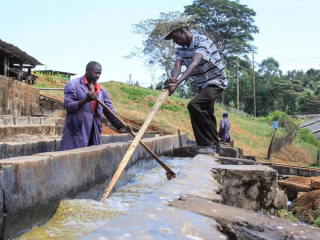
The difference between G1s and G2s-what is the purpose of grading? use water washing and fermentation to remove the skin, pulp and mucous membrane. Farms that use water washing must build washing ponds and be able to introduce an endless supply of live water. During the treatment, the mellow beans are put into the pool and passed back and forth, using the friction of the beans and the power of running water to wash the coffee beans to light.

Introduction to the Yega Coffee Cochel Shepherd Coffee Bean Flavor processing Manor in Ethiopia
The grade of Ethiopian coffee: Ethiopian washed coffee Yega Chefe G1 G2 Sidamo (Yirgacheffe, Sidamo) the highest grades are level 2 and 3 (G2, G3), while sun-processed coffee in eastern Ethiopia is mostly Grade 4 or Grade 5 (G4, G5). In many cases
The difference between Yega Snow Coffee G1 and G2 Yega Snow Coffee Coffee characteristic Sun Yega Snow Coffee
The beans are small, neat and round. Ethiopian sun beans are generally G3--G5, but the beans are G2, equal to the grade of washed beans. Although there are still a few defective beans, they are commendable compared to the sun beans of Harald and Sidamo. The 2015 sun Yega snow caffeine has appeared in the G1 grade, surpassing the G1 washing in terms of quality and sales. This bean is baked

Unique Ethiopian Coffee Estate Boutique Coffee Bean Cultivation Location Climate Sea
Ethiopia is home to Arabica coffee, and it is in the forests of the Ethiopian Kaffa region that you can see Arabica coffee growing wild. In Ethiopian, coffee is called Bun or Buna, and coffeebean may be translated from Kaffa Bun. Arabica coffee was discovered early in the Harar area and is likely to come